A printer can become difficult to use for many different reasons. It may stop connecting to Wi-Fi, appear offline, fail to print, lose communication with a computer, or require new software after a device or network change.
Nextgenassist provides printer support services for Seattle, WA users who need help with printer setup, installation, wireless connections, drivers, troubleshooting, scanning, and other technical issues. The right solution depends on the printer, connection method, computer, software, and symptoms involved.
Get a quick response from our printer support team.
Happy Clients
Success Rate
Experience
Always Available
Printer problems are not always caused by the printer hardware itself. A device can be powered on and still fail to print because of a network connection, incorrect printer selection, driver problem, software configuration, or stuck print queue. Support can help identify where the problem is occurring and determine the appropriate next step.
Setting up a new printer involves more than connecting the power cable. Depending on the device, you may need to install software, connect the printer to a computer or Wi-Fi network, configure preferences, and complete a test print. Printer setup assistance can include:
A properly configured printer is easier to use and troubleshoot later.
Wireless printing depends on communication between the printer, router, computer, and printer software. If one part of that connection changes, the printer may disappear from the available-device list or stop receiving print jobs. Printer Wi-Fi troubleshooting may involve:
The printer and the device sending the print job generally need a compatible network path for communication.
When a printer stops working, the first step is understanding what changed. Printer troubleshooting may address:
A structured diagnosis can help determine whether the problem is related to the printer, computer, software, network, or connection.
Printer drivers provide the communication layer between the operating system and the printer. A missing, incompatible, or incorrectly installed driver can prevent a computer from communicating with the device properly. Printer driver installation and troubleshooting can include:
If the printer works with one computer but not another, software or driver configuration may be worth investigating.
A printer can display an offline status even when it is switched on. Possible causes include:
Printer offline support should start by checking the connection and status before making unnecessary configuration changes.
Many printers combine printing, scanning, and copying in one device. It is possible for printing to work while scanning does not. Support may involve:
The appropriate troubleshooting steps depend on the printer model and how it is connected.
If a printer cannot connect to Wi-Fi, check the selected network, wireless settings, and connection between the printer and router.
Network credentials, router changes, device configuration, or different network environments can all affect wireless printing.
A printer may appear ready but still fail to produce a document. Possible causes include:
Checking the printer status and communication path can help narrow down the issue.
An offline status does not automatically mean that the printer is physically disconnected.
The computer may have lost communication with the printer or may be using an outdated connection or incorrect device configuration.
If a computer cannot detect a printer, possible causes include USB problems, Wi-Fi configuration, network discovery, printer drivers, or device settings.
The troubleshooting process should first identify whether the printer is connected through USB, Wi-Fi, or another network connection.
Driver problems can appear after installing a printer, changing computers, updating an operating system, or reinstalling printer software.
Checking compatibility and reinstalling the appropriate software may help restore communication.
A stuck print job can prevent other documents from printing.
If several jobs remain pending, reviewing the print queue and printer status can help determine whether the problem is related to the computer's printing system.
Network printers depend on communication between several components: Printer → Network → Router → Computer → Printer Software. A change to any part of this setup can affect printing.
For office environments, network configuration and shared-printer settings may also need to be reviewed.
Different environments create different printer-support requirements.
Home printers are often used for documents, schoolwork, forms, shipping labels, personal records, and occasional scanning. For home users, simple installation and reliable wireless connectivity can make a major difference in everyday use.
A printer used for remote work needs to communicate reliably with a laptop or desktop, home network, and printer software. Driver problems, Wi-Fi changes, and printer configuration issues can interrupt work when printing is part of a daily workflow.
Small businesses may rely on printers for invoices, shipping documents, reports, forms, and other business materials. When several users share one printer, the problem may involve network communication or shared printer configuration rather than the printer hardware itself.
Office environments may use network-connected printers and multifunction devices across multiple computers. Troubleshooting may involve network printing, shared printer configuration, driver installation, print queues, wireless connectivity, scanning, or device configuration.
Wireless printing works through communication between the printer and other devices on the same network or through a supported network configuration. If a printer was working previously but stopped after a router, Wi-Fi, or computer change, the connection should be checked before assuming the printer has failed.
For businesses, shared or network printers may require additional configuration depending on how users access the device.
Some printer problems can be handled through remote technical assistance, particularly when the issue involves software, drivers, settings, connectivity, or configuration.
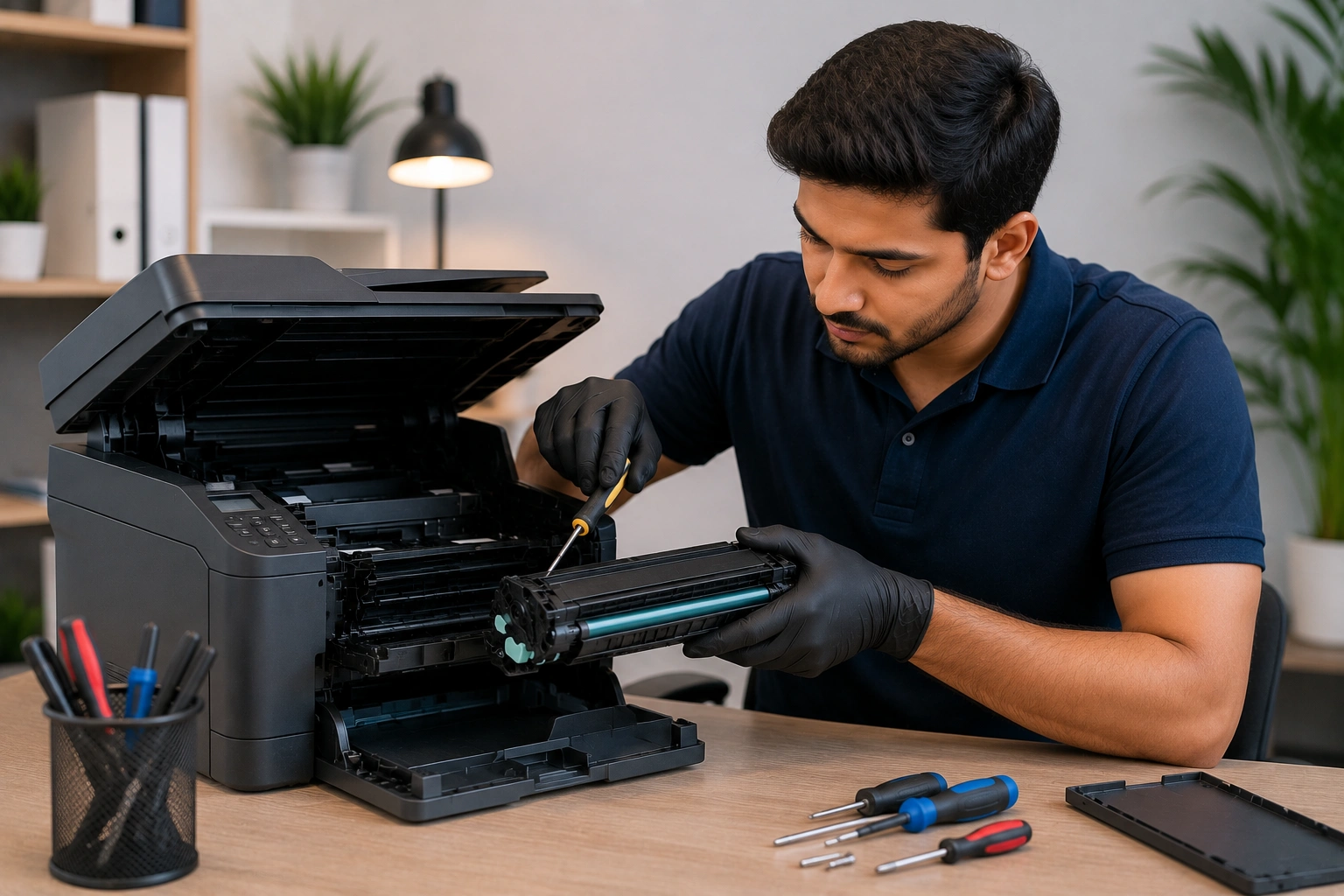
Remote support has limitations. Physical damage, mechanical failures, damaged components, repeated paper-feed problems, and certain hardware faults may require hands-on service from an appropriate local repair provider.
The process begins with the symptoms. For example, the printer may be offline, unable to connect to Wi-Fi, not printing, displaying an error, or failing to scan.
The printer model, operating system, connection method, and network environment can all affect troubleshooting.
The problem can then be evaluated across areas such as connectivity, drivers, software, configuration, network communication, and hardware.
Once the likely cause is understood, the appropriate troubleshooting steps can be applied without changing unrelated settings.
After troubleshooting, the affected function should be tested to determine whether the printer is communicating and operating correctly.
If the issue is resolved, the printer can return to normal use. If the problem appears to involve physical hardware or mechanical failure, hands-on repair may be the more appropriate option.
Not every printer issue can be solved through software or remote troubleshooting. Professional hands-on repair may be appropriate when a printer has:
Identifying this distinction can save time and prevent repeated software troubleshooting when the underlying problem is physical.
We provide fast and reliable remote printer troubleshooting, installation, setup, and repair assistance across major U.S. cities.
Whether you need help setting up a new printer, resolving a Wi-Fi connection problem, fixing an offline printer, installing printer software, or troubleshooting printing and scanning issues, identifying the cause is the first step toward the right solution. Contact Nextgenassist to discuss your printer support needs and determine the appropriate next step.
Fill the form and our team will contact you shortly.
